Salomon Speedcross 6 Review: Best Mud Shoe, Full Stop
Tested across 200 miles of Cornish coast path and Bodmin Moor. Is the Salomon Speedcross 6 the best mud shoe available? Mostly yes — but there's a catch.
Time: 7am Date: January Location: Between Mawnan Smith and the Helford causeway Type of tarmac: The more you know Nature of the world’s surface: Where the path ceases to be and becomes simply compressed agricultural runoff So my fellow runner set off about 50 metres ahead. Striding out in his Hokas. Lost it on a damp patch of the world’s surface and has an unceremonious dump into the nearest gorse patch. No trace of him bar the fact he’d just vanished from view. With nary a glance back I carried on along the same bit of ‘path’ without a second thought.
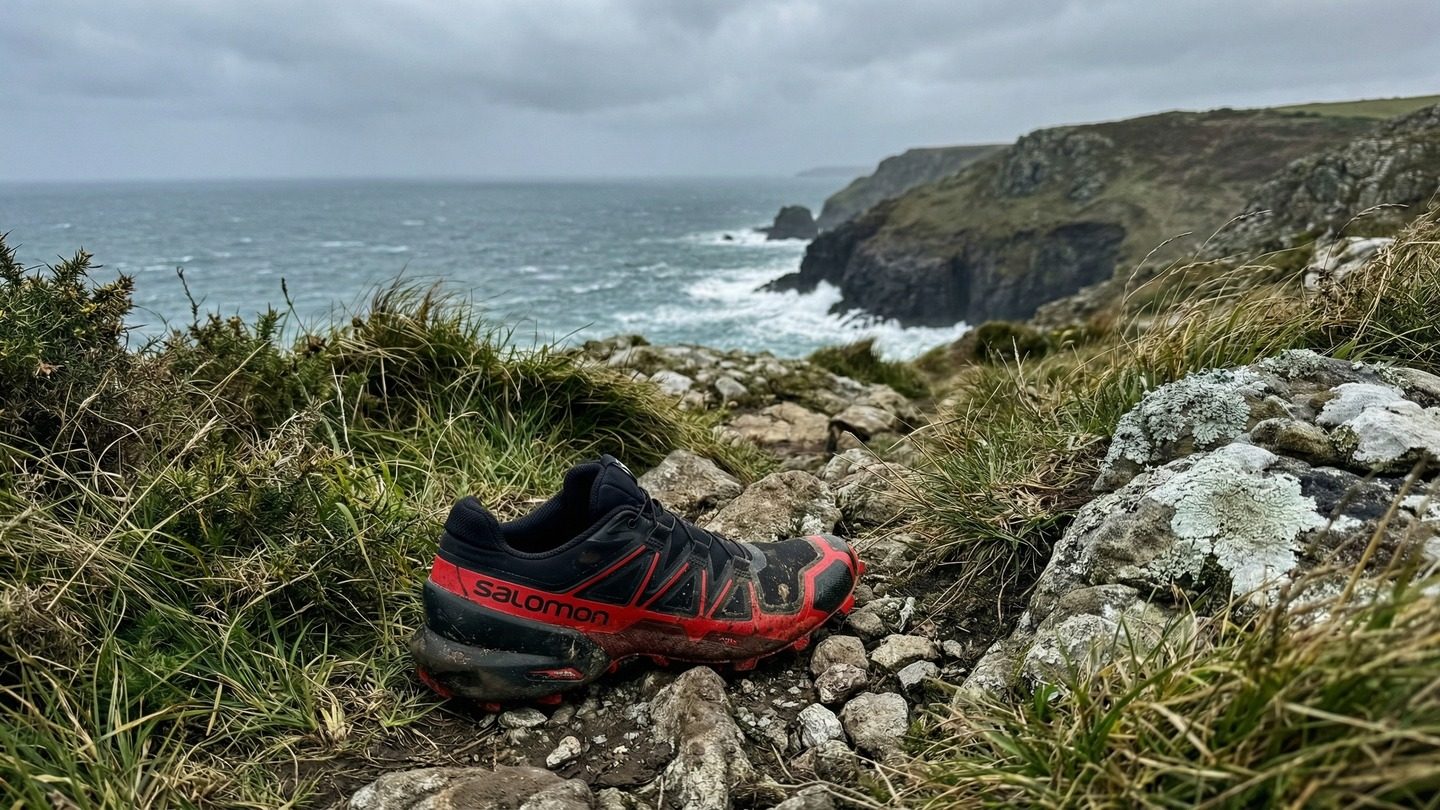
Here is the Salomon Speedcross 6 in its natural habitat. I’ve run about 200 miles on a pair since November. The great majority of those have been on the coastal path from Falmouth to the Lizard and I’ve run a few times on Bodmin Moor when I’ve grown tired of the path. So, short version: at this price, on soft wet ground, these are the best trail shoes available. There’s a catch, however.
What Makes the Speedcross 6 So Good in Mud?
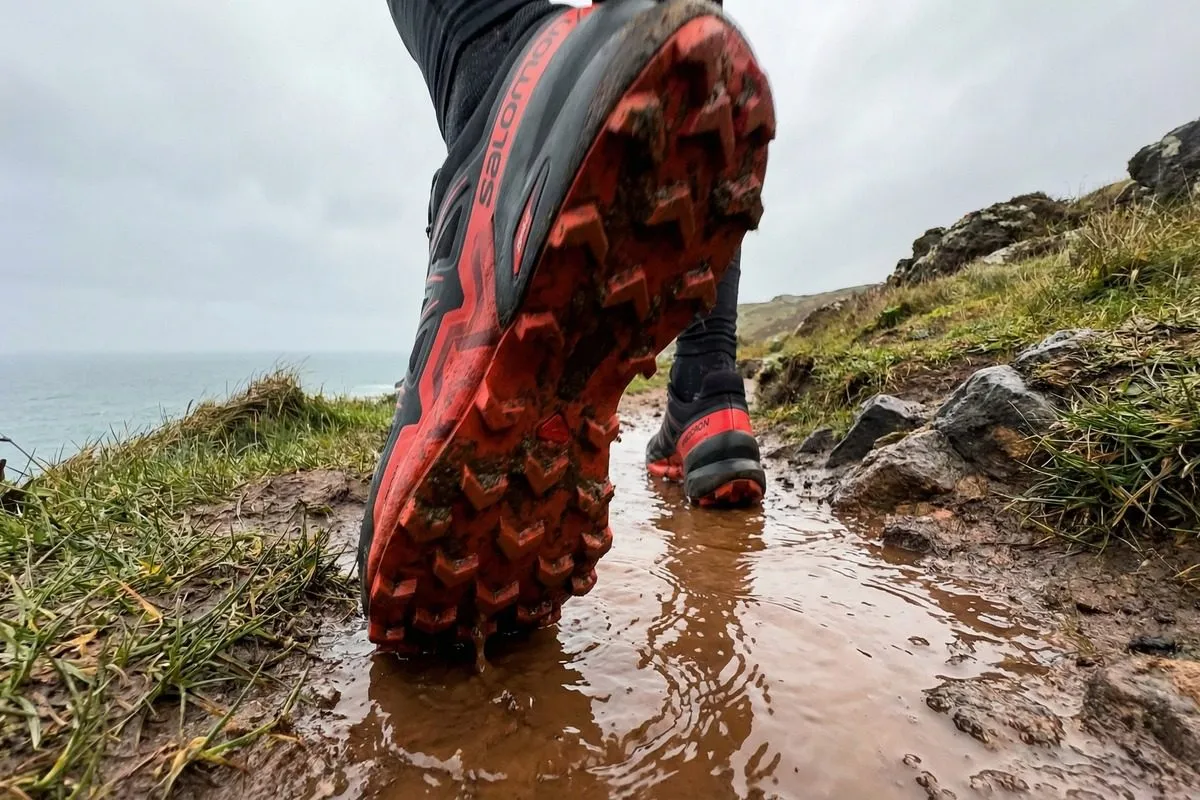
It’s pretty much obvious that the Contagrip MA outsole does a very good job of doing what it’s designed to do – 5mm lugs in a bi-directional pattern that grip and release quite efficiently, rather than getting mired in a plug of mud. While walking the coastal path at a dripping wet section of the coast near Falmouth, on a lovely bit of Cornish clay that provides about as difficult a surface as you can get for shoes with moderately aggressive lug compounds, I tested them against my Brooks Cascadia 17s, and the Speedcrosses stuck where the Cascadias let the mud take them over. The Cascadia 17s are a very good shoe, quite likely the best all-round trainer I’ve ever run in. But in the mud, they can’t match the Speedcross. That’s a different comparison.
The anti-debris collar is just another part of the outsole. After 200 miles of mostly bracken-strewn trails, shale paths and the odd muddy bog I’ve yet to need to stop and tip the grit out of the shoe.
I’ve been meaning to mention the EnergyCell+ in the midsole of the Speedcross 5 but now with the version 6, I think I can compare the two fairly. I actually really enjoyed the harder, more responsive feel of the Speedcross 5. Some people agreed and others weren’t, but as a general rule it made it hard to run long in them. After running the Speedcross 6, I feel like they’ve added enough cushioning so that the uncomfortable feeling from the rocks hitting your knee isn’t transmitted as directly to the top of your knee. It’s not tons of cushioning like a max shoe but it’s definitely more than the v5. You can still very much feel the trail beneath your feet, but it’s not like running on a marshmallow — and that is a huge improvement from the previous version.
Fit, Comfort, and the Quicklace System
This fit profile is not for wide forefeet (more on that in a minute) but Salomon also supplies a 2E width (Wide) version in this shoe, and my recommendation, if possible, is to order this if you can, or go up by half a size if that’s not possible. Having some excess width in your foot means the shoe doesn’t sit comfortably. I have a standard width foot, though, and I was amazed at how well the foot is secured. Heels remained locked in place even while striding uphill and this was a bonus on the rough and loose coast path where the few inches between stepping stones are steep and very slippery and any foot movement, transfer of weight or unhooking between any two is punished by the inevitability of loss of traction.
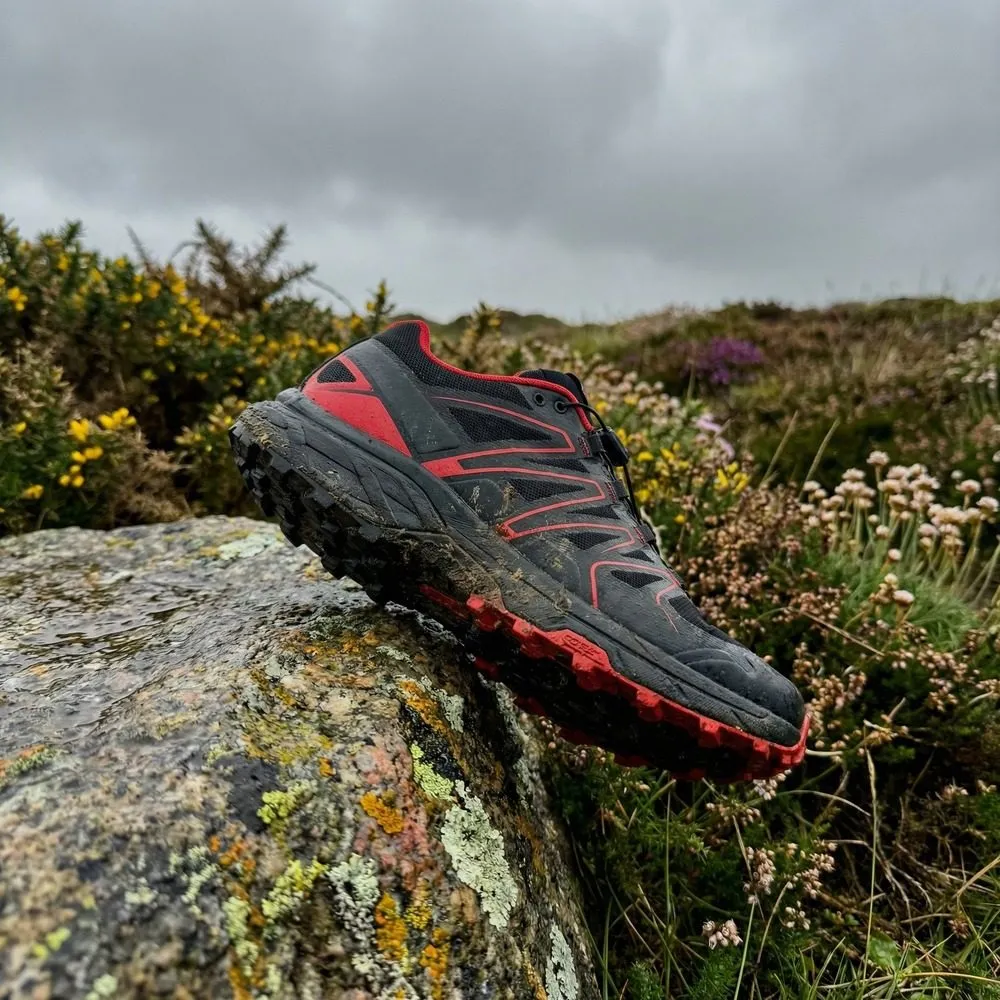
What really impressed me was Salomon’s decision to use a Quicklace system. After some reservation I now fully endorse them and indeed after living with them I would not wish to go back to my other shoelaces — nor a handful of very cold fingers in January to fumble round trying to tie and untie these while ascending while my hands are numb from cold. The lace itself can be quickly slipped through the various holes provided after only a single tug, and a small pouch can be fitted into a small pocket sewn onto the top of the tongue to catch the toggle as the laces are tensioned and also so they run round and do not flail around.
Its quite a 10mm heel drop so its worth bearing in mind if you are used to lower drop shoes. You’ll find it makes quite a difference on steep descents. It’s not so apparent on the roll down flat plains but it is pretty noticeable on steeper techy descents. Having said that, I had no issues with it — but if you are a dedicated forefoot striker or have retrained yourself onto a 4mm drop then you’ll want to give your Achilles a bit of time to adjust to the extra height of the heel.
Where the Speedcross 6 Falls Short
It’s a specialist shoe pretending to be a general purpose shoe and as such falls short in certain key areas. On the rare occasions when you have to run on pavement in between tracts of off road single track, the lugs pick up small stones and the ride very quickly breaks down, transferring every bump directly to the runner. On packed gravel or dry hard pack the aggressive Contagrip MA compound is soft and wears down relatively quickly and doesn’t have quite the lateral grip provided by a compound with a harder durometer.
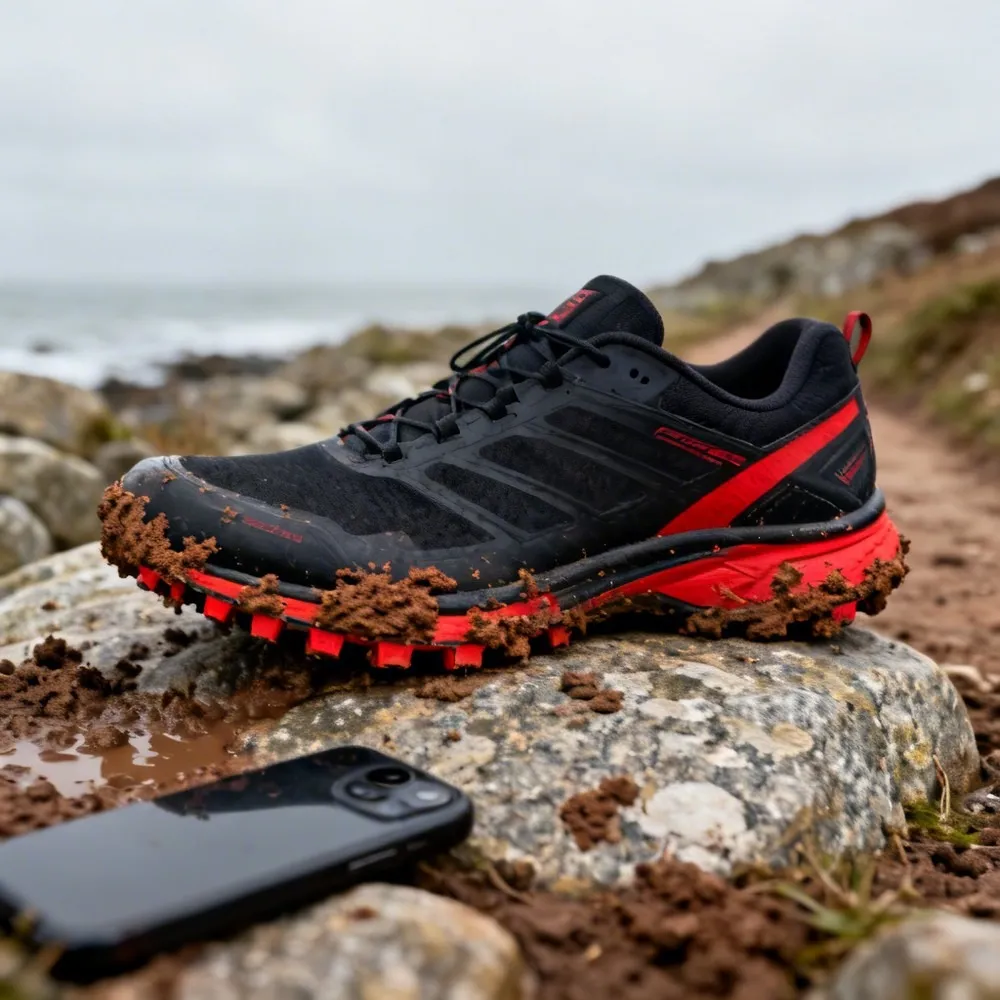
While the lugs will fall apart on surfaces such as these and the sole will wear down the lugs to the point that the tread is dramatically reduced, running primarily in soft terrain, you can expect the shoe to last for roughly 400 miles. Should you be in a situation where thirty percent or more of your running surface is pavement or similar, we’d expect to see the lugs fall apart after 250–300 miles of running through the contact points between sole and surface.
The most notable omission on these shoes is the rock plate. For most of the coast path running this won’t make a huge amount of difference — the terrain is soft enough that you’re unlikely to take a full-on stone impact to the sole of your foot. But on more technical ground where you’re running over bigger rocks and stony pathways, it makes a difference. It’s not a weight issue at 298g, but it’s a practical one if you’re planning on using the shoe on very rocky and technical trails.
Speedcross 6 vs Speedgoat 6: Which One?
Some days I wear my HOKA Speedgoat 6. The Speedgoat is a wider, softer shoe with a Vibram Megagrip sole, which is fantastic on mixed terrain with hard, soft, rocky and rooty sections. Although I think the cushioning of the midsole is quite important for long distance running, the HOKA will not be my choice for a 40-miler due to the height of the midsole.
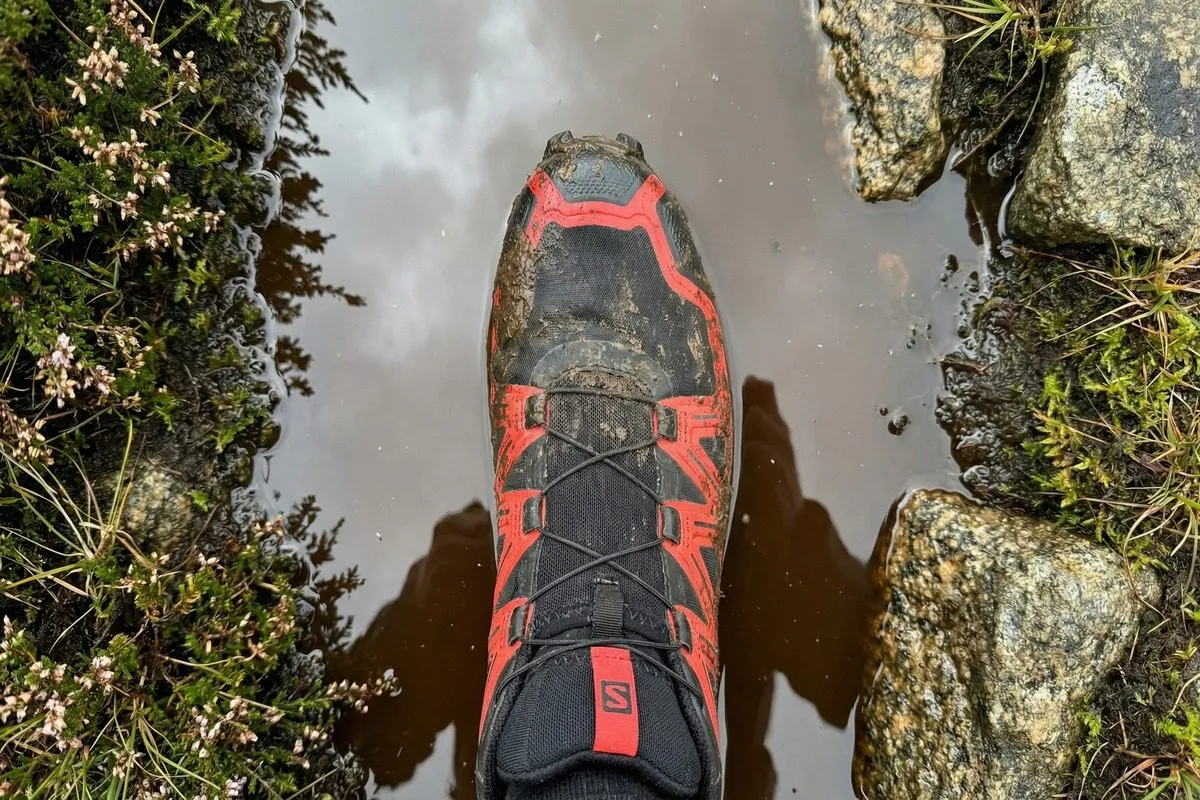
A pure mud run in Cornwall in January also turned out to be a Speedcross rather than a Speedgoat day. The lugs on the Speedgoat are not as deep, and therefore they do not bite into the soft ground as effectively as those on the Salomon. The lugs and the slightly harder compound of the Megagrip sole may also not provide the same level of support on very rooty trails.
If you run technical, varied terrain and want one shoe: Speedgoat. If you run predominantly soft British ground and want the best grip available: Speedcross, without exception.
Who Should Buy the Salomon Speedcross 6?
This is a shoe built for runners who run on soft terrain. If your running grounds are bog, or mud, or wet winter paths — think Cornwall, the Pennines, the Lakes in February — then this is the shoe for you. A 2E wide fit version is available if needed. Stick to your regular size.
Skip it if you run mixed terrain with a lot of road connections, if you are a forefoot striker and need a low drop, or if you want a shoe that can do it all. In those cases, the Speedgoat 6 is a better bet.
The Salomon Speedcross 6 is available for around £130. At that price point it’s at the top end of what I’d call the mid-range. The grip on the terrain is reflected in the price of the rubber — though I’m not quite sure it stacks up to that cost if you’re going to be spending much of your time on hard-pack.
Grip: 5/5. Cushioning & Ground Feel: 4/5. Fit & Security: 4/5. Durability: 3.5/5. Value: 3.5/5. Overall: 4/5.
Check the latest Salomon Speedcross 6 price on Amazon UK
Frequently Asked Questions
Is the Salomon Speedcross 6 good for mud?
Yes — it’s the best mud shoe we’ve tested under £150. The 5mm Contagrip MA lugs are significantly better than any Vibram Megagrip pattern we’ve tried. It’s hard to find anything better for the average UK winter trail, bog and coastal path.
Do the Speedcross 6 run narrow?
Yes. The toe box on a standard (D) width is relatively snug, so we recommend the 2E wide option or going up half a size if you have some width to the front of your foot or if your foot expands on long runs.
What is the heel drop on the Salomon Speedcross 6?
It’s 10mm, which is on the higher end. Low-drop shoe users will likely find the transition noticeable, particularly on steep techy descents. Heel strikers and neutral runners comfortable in a higher drop profile will have an easier time. Give your Achilles a few runs to settle in.
How long do the Speedcross 6 lugs last?
On soft ground, roughly 350–400 miles. On mixed terrain with occasional tarmac, expect 250–300 miles. The Contagrip MA compound is soft — excellent in mud, but it wears faster on hard surfaces than a firmer compound would.
Speedcross 6 or HOKA Speedgoat 6?
If you primarily run soft ground — mud, bog, wet Cornish trails — go Speedcross. If you run varied surfaces with big rocks and need long-run comfort, the Speedgoat is the better all-rounder.