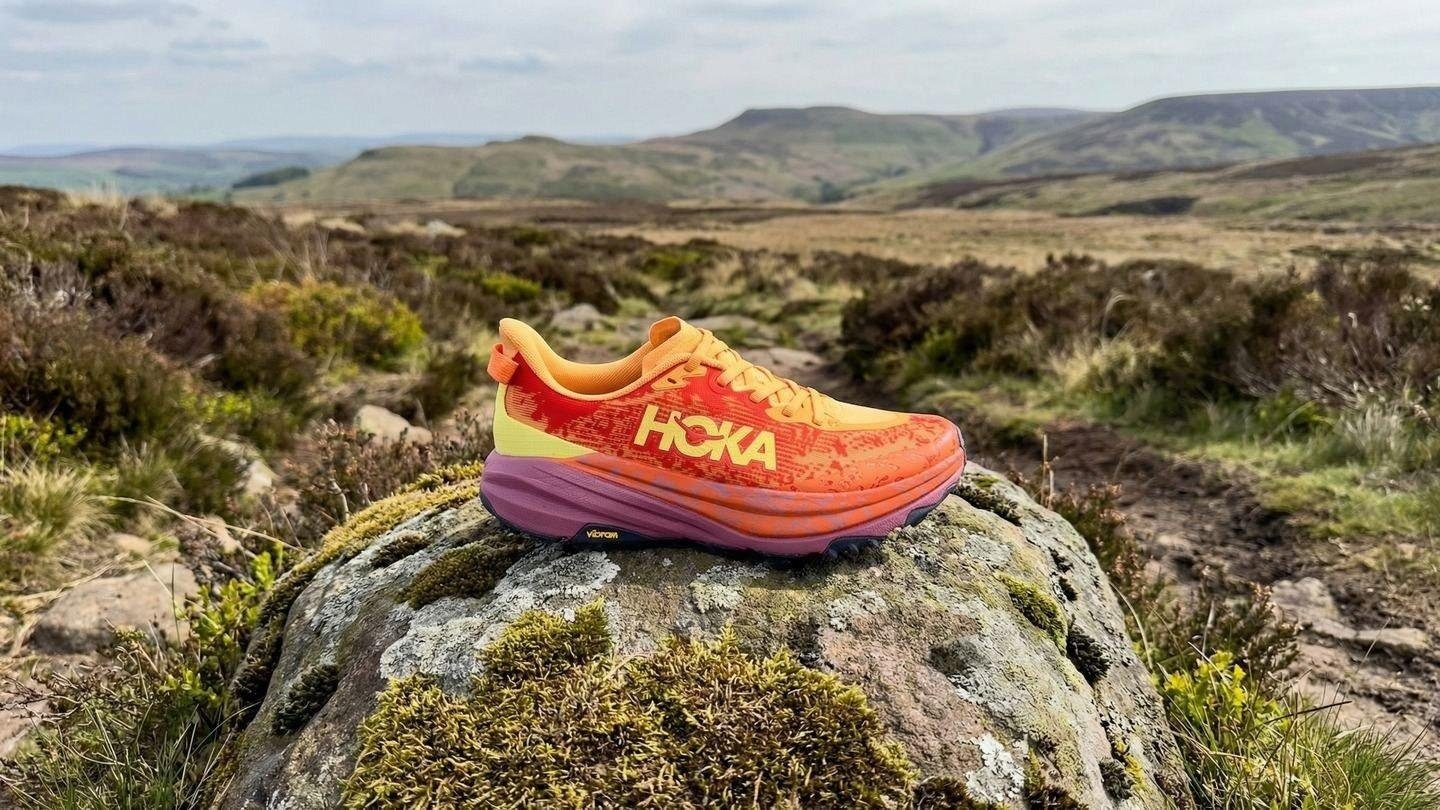
HOKA Speedgoat 6 Review: Max Cushion, Real Grip
Tested over 160 miles on Lake District fell paths. The Speedgoat 6 is HOKA's big cushion trail shoe — but does the Vibram Megagrip actually hold on UK mud?
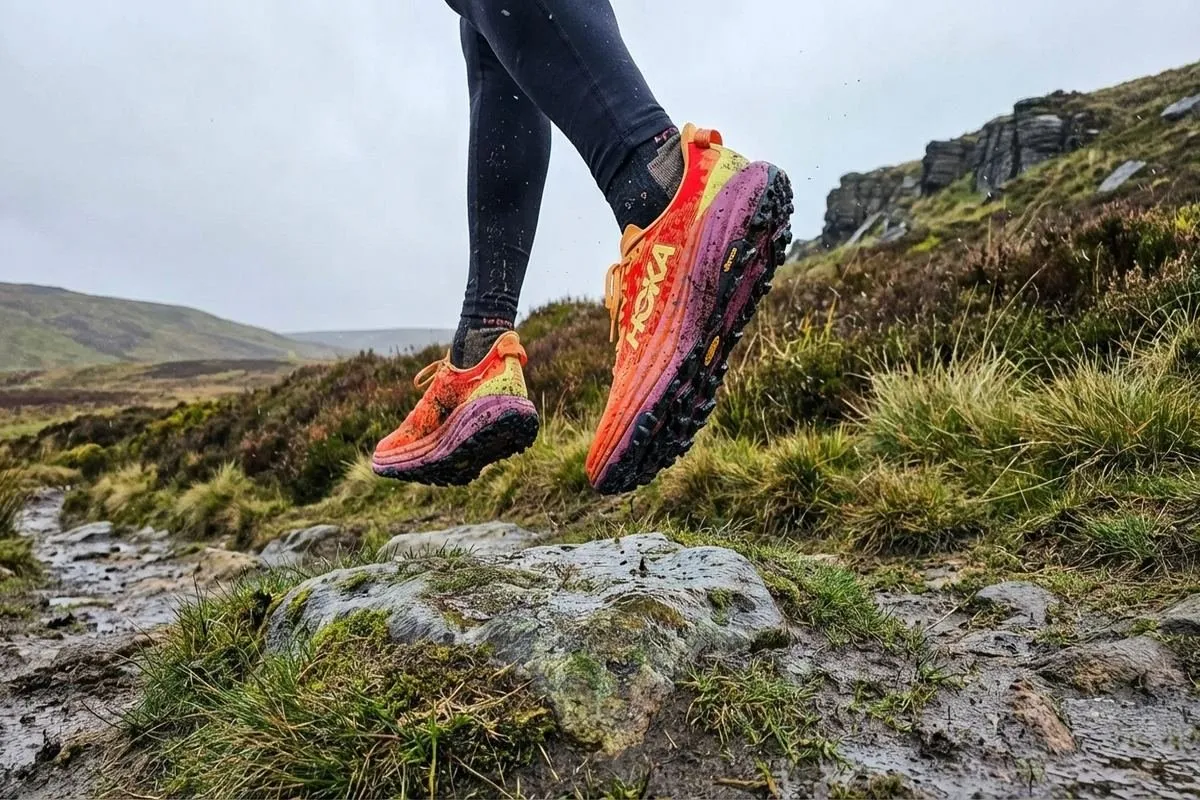
In Helvellyn’s east face, the path to Glenridding is one of those Lakeland routes that appears not too bad until you actually try to make your way across it in winter, especially in November. You end up trudging through saturated peat on an assortment of loose slate and the slope’s steep enough that you’ll be reminded your legs are still there even though they may feel a bit reluctant in acting the required part of the journey down. I’ve descended this path in four different pairs of footwear over the years. Two of those pairs have been simply a joke. One pair actually held up fairly well. The HOKA Speedgoat 6 made me look almost controlled on the descent — which is about as close to competent as you’d want to appear on this bit of trail.
I’ve been running with these shoes for approximately three months now, with about 160 miles split across Helvellyn, Borrowdale and Blencathra, and several shorter trips up Skiddaw when I was in the mood for a recovery run. The Lake District in winter gives you quite a varied landscape to play with — mud-filled valleys, slippery granite ridges, loose scree at altitude and the occasional stretch of tarmac to link everything together. That’s a proper mixed-condition test, not just smooth flowing single track.
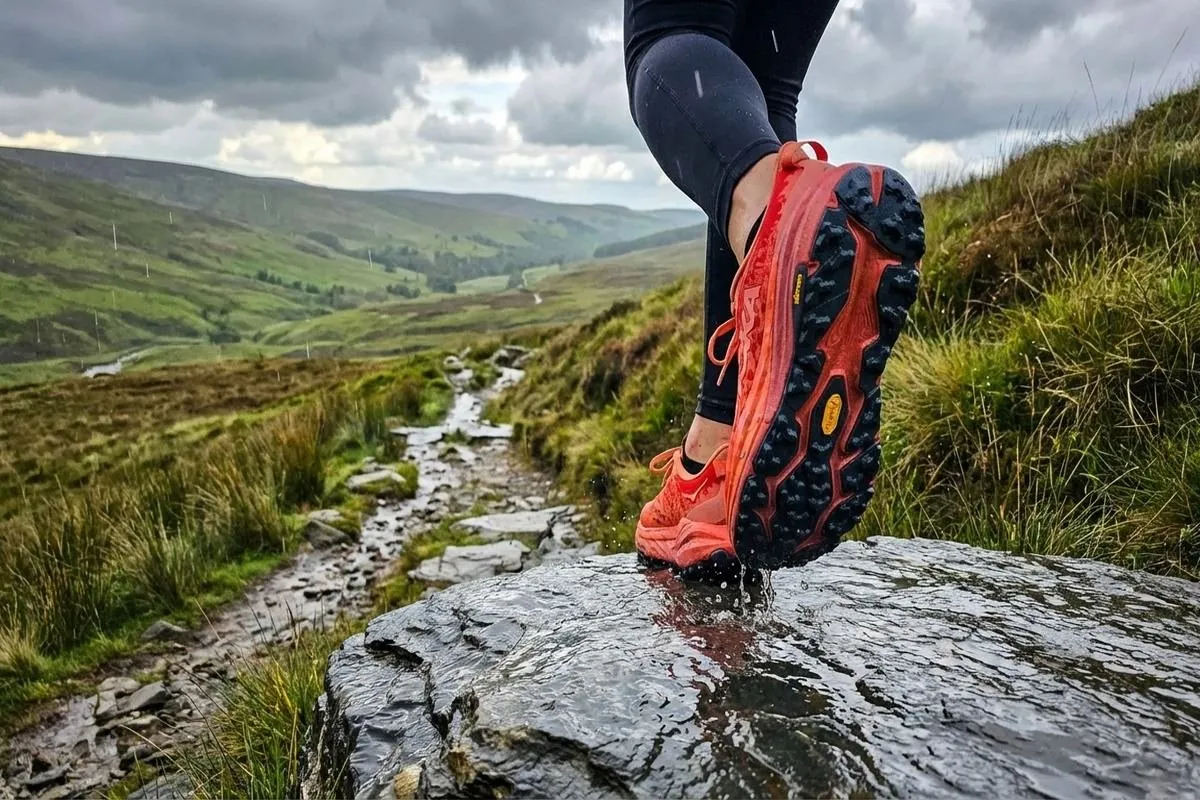
How Does the Speedgoat 6 Handle Grip on Wet Trails?
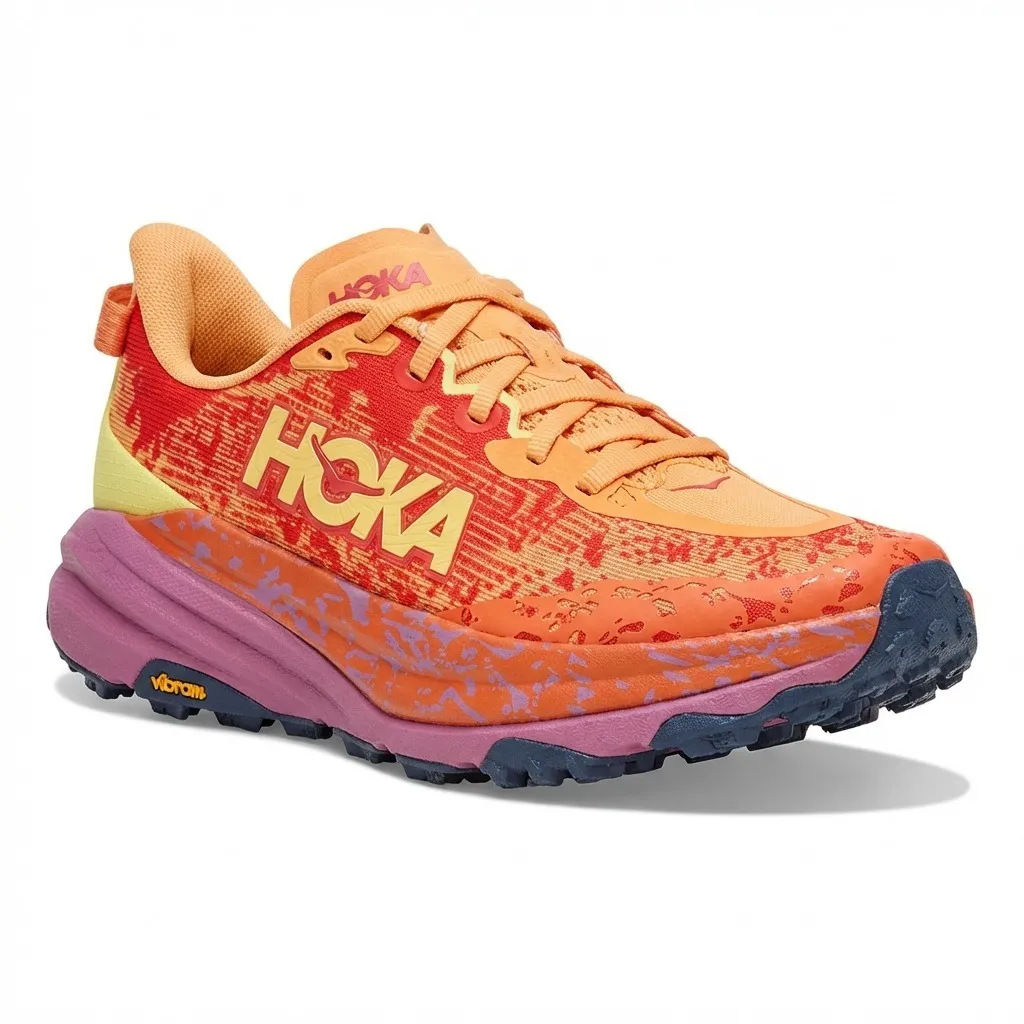
First things first. It’s a HOKA. It’s got a Vibram MegaGrip outsole with 5mm lugs. Does it actually hold?
On wet rock: yes, genuinely. The MegaGrip compound is the same rubber used in premium mountaineering boots, and on the descent from Swirral Edge after heavy rain — where I’d previously slipped in shoes that claimed to be trail-ready — the Speedgoat 6 held with a confidence I wasn’t quite expecting. It works.
Deep mud is a different conversation. The 5mm lug depth doesn’t sound insufficient until you’re on Borrowdale valley floor after a week of rain. Pretty soon the gaps between the lugs are clogged and the traction drops off noticeably as the lug pattern starts to act like a paddle rather than a grip. The Salomon Speedcross 6’s deeper, more aggressive chevron lugs are in a different league in the soft stuff — the Speedgoat doesn’t claim to match it, and it doesn’t.
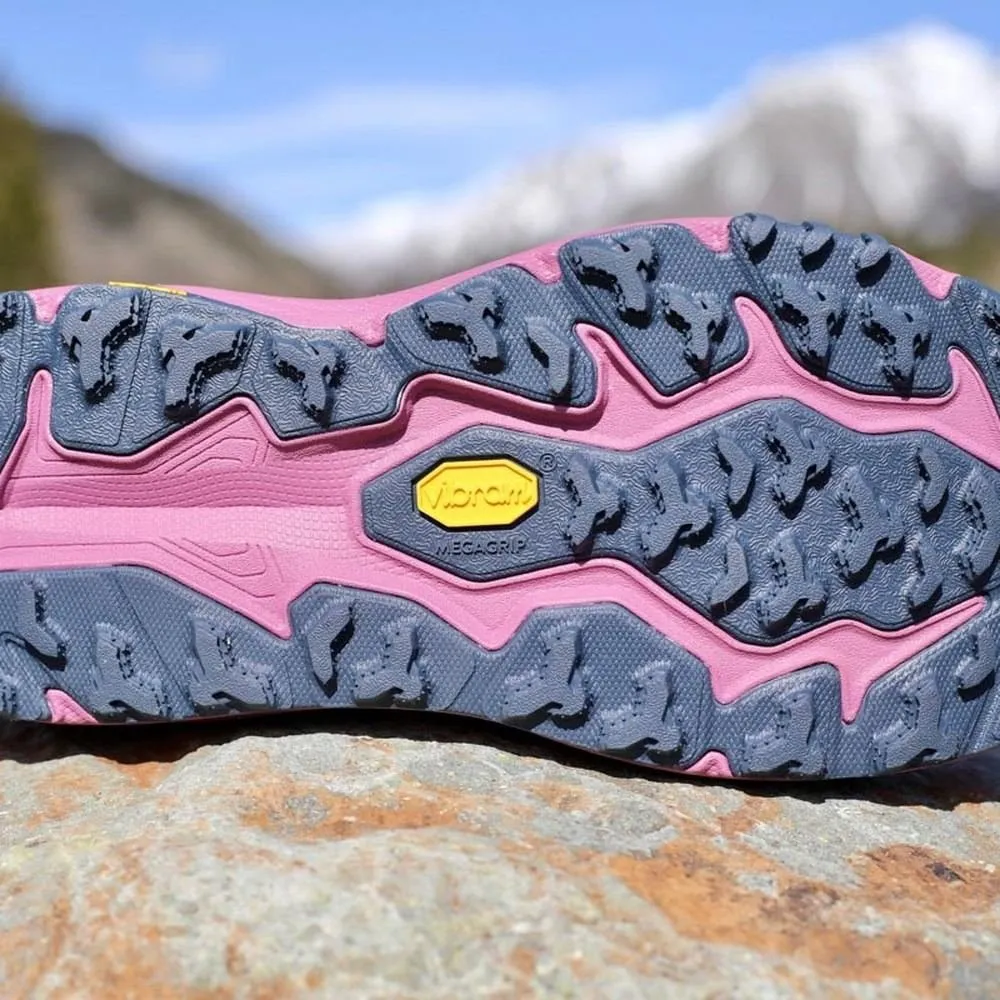
What the Speedgoat does better is the mixed-terrain day, and in the Lakes, most days involve everything. Wet rock, roots, boggy sections, hard pack and the odd tarmac link. For that, MegaGrip is a more versatile compound than Contagrip, which can feel awkward the moment the terrain firms up. If the surface changes several times during a single run, the Speedgoat handles those transitions more gracefully.
Cushioning, Ground Feel, and the Firmer Midsole
The Speedgoat 5 had a cushioning problem. The midsole was soft enough that it compressed under sustained load and felt vague on anything technical. A lot of people loved it for flat ultras. Most Lake District runners found it a bit much. HOKA have addressed this in the 6.
The compressed EVA midsole is noticeably firmer — it returns energy instead of just absorbing it. There’s a responsive quality underfoot that was absent in the 5. After three months and 160 miles it still feels much the same as day one, which is more than I could say for the previous version at this stage.
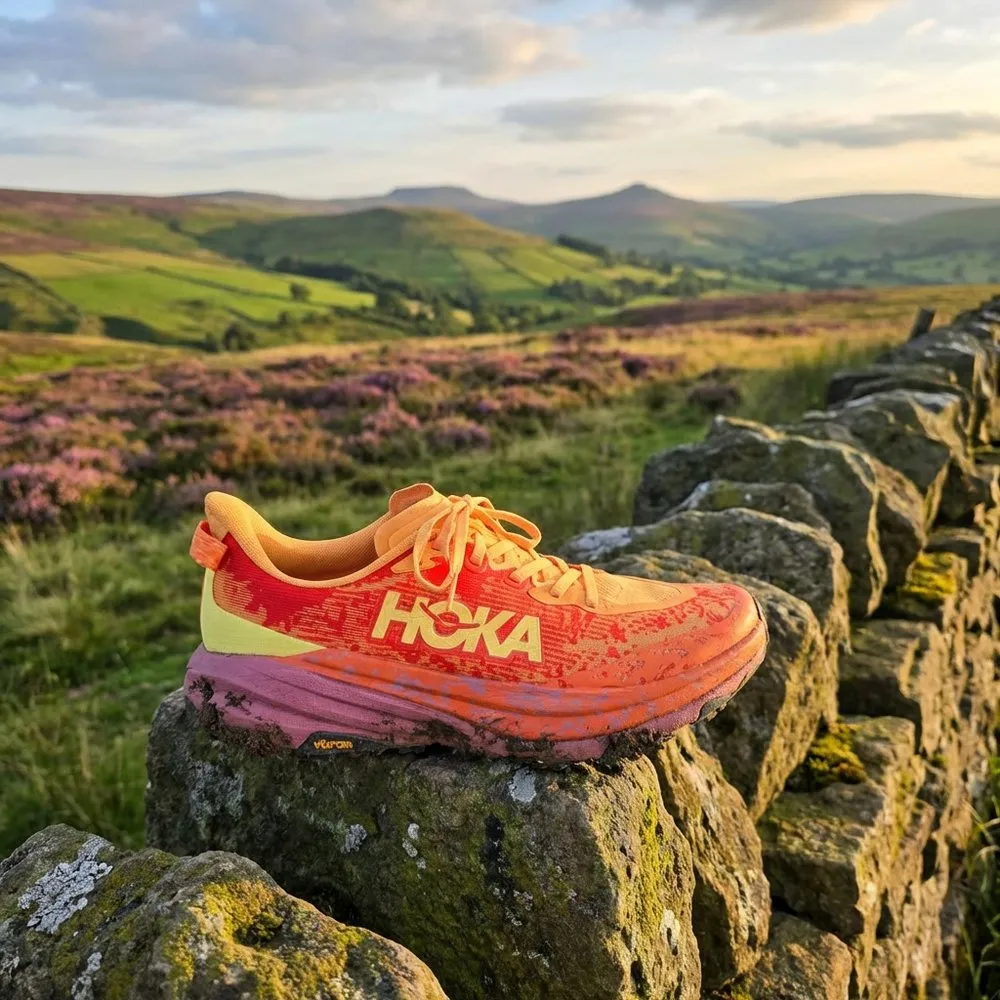
The trade-off is proprioception. With 40mm of stack height at the heel and 35mm at the forefoot, you’re elevated off the trail in a way that limits feedback. On runnable ridge paths this doesn’t matter — you’re moving efficiently and the cushioning is earning its keep. On very rocky technical terrain where precise foot placement matters, the high stack feels slightly removed. It’s not unsafe, but it’s not the shoe I’d reach for on anything requiring proper technical footwork.
For ultras or long runnable days — the purpose this shoe was built for — the midsole is excellent. 278 grams for 40mm of cushion is genuinely light. Your legs will notice the difference at hour six of a long mountain day.
Fit, Sizing, and the Toebox Question
The SG5 was too narrow for a lot of runners with wider feet, which cost HOKA real goodwill. The 6 has addressed this, though not dramatically — the toebox is slightly wider, enough to matter after four or five hours when your feet have swollen. It fits true to size for most runners, and it’s available in wide (2E) for those who need it.
The heel lockdown is solid. There’s an extra lace hole at the top specifically for locking in the heel on technical descents, and it does what it says. I had no meaningful heel lift even on steep, sustained downhills — and the Helvellyn descent is a reasonable test of that.
One note on sizing: if you’re coming from Brooks, Saucony, or Topo shoes, go half a size up in length. HOKA runs slightly shorter than those brands and you don’t want your toes making contact on long descents. The Speedgoat 6 is available in standard and wide widths on Amazon — worth checking stock if you need a specific width.
HOKA Speedgoat 6 vs Salomon Speedcross 6
I’ve had a pair of Salomon Speedcross 6 in regular rotation over the same period, running some of the same routes, so the comparison is a reasonably fair one.
If you run mainly on soft, wet, genuinely muddy trails: Speedcross 6. The lug depth and chevron pattern are in a different league in soft ground. There’s no argument.
If you run mixed terrain — which most Lake District runners do — Speedgoat 6. MegaGrip is more versatile across surfaces, the cushioning handles bigger mileage days, and the fit accommodates foot swell better over longer efforts.
One thing worth noting: the Speedcross runs at 10mm drop, the Speedgoat at 5mm. That’s a significant difference in how each shoe loads your legs over time. If you’ve been running in higher-drop shoes and you switch to the Speedgoat, ease the transition over a few weeks — don’t go from 10mm to 5mm and immediately put in a 35-mile day.
Who Should Buy the HOKA Speedgoat 6?
Ultra runners and long-distance trail runners on mixed terrain. If you’re doing 30-40 mile days where the ground shifts from bog to ridge to rock to tarmac, the Speedgoat 6 is the most complete shoe in this price bracket. The Vibram MegaGrip holds on wet rock better than most alternatives, the midsole improvement over the 5 is real and meaningful, and the fit is now wide enough to accommodate a range of foot shapes without needing to go up a size.
The durability question is worth flagging. Multiple runners have reported mesh breakdown and significant lug wear by 250-300 miles — below what you’d want from a £140 shoe. I haven’t hit that point in my testing, but it’s a consistent enough complaint across enough sources to factor into your buying decision.
Skip it if: you run mostly deep bog and need maximum mud grip (Speedcross is the better tool), you want genuine trail feel and proprioception on technical rocky ground, or you’re budget-conscious about durability (the Brooks Cascadia 17 at around £115 is a credible alternative if max cushion isn’t a priority).
Ratings:
- Grip: 4/5 — superb on wet rock and roots with Vibram MegaGrip; lugs clog in sustained deep mud
- Cushioning & Ground Feel: 4/5 — firmer midsole is a genuine upgrade on the 5; proprioception trade-off on very technical terrain
- Fit & Security: 4.5/5 — widened toebox and heel lockdown are both excellent
- Durability: 3/5 — user reports of 250-300 mile lifespan are concerning at this price point
- Value: 3.5/5 — fair at £140 if you get the miles in; the durability question keeps it below 4
Overall: 4/5
Check current price on Amazon →
Frequently Asked Questions
Is the HOKA Speedgoat 6 good for mud?
Mostly good, but not best-in-class for the soft stuff. The Vibram MegaGrip gives solid grip on wet rock and damp hard pack, but the 5mm lug depth clogs up in sustained soft bog. For genuinely muddy Lake District conditions, the Salomon Speedcross 6 has deeper, more aggressive lugs and will outperform the Speedgoat in the really soft stuff.
What is the heel drop on the HOKA Speedgoat 6?
5mm — one millimetre higher than the Speedgoat 5. Lower than most traditional trail running shoes (the Speedcross 6 is 10mm) and lower than most road shoes. Worth easing into if you’re used to higher-drop footwear.
Does the HOKA Speedgoat 6 run true to size?
Yes, for most runners. If you typically wear Brooks, Saucony or Topo shoes, go half a size up — HOKA runs slightly shorter than those brands. Available in standard and wide (2E) widths, which is useful if your feet swell significantly on long days.
How many miles does the HOKA Speedgoat 6 last?
User reports suggest 250-350 miles before meaningful lug and midsole wear, which is below average for a shoe at this price. The midsole itself has proven more durable than the SG5, but mesh wear and lug degradation at the lower end of that range are a genuine concern if you’re running high mileage.